Innovation Inside Pharma 2026: How Switzerland Is Defending Its Leading Position in the Life Sciences World
Innovation Inside Pharma 2026: How Switzerland Is Defending Its Leading Position in the Life Sciences World
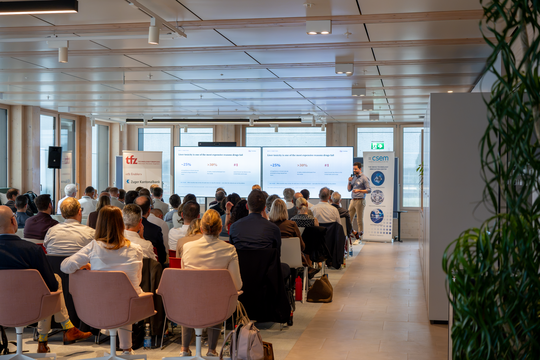
The Rotkreuz site epitomizes the Zug life sciences ecosystem like few others. The Technology Forum Zug welcomed over 100 industry representatives, government officials, and deep-tech pioneers to Amgen’s headquarters. It quickly became clear: The Swiss pharmaceutical and biotech landscape is facing critical decisions. Under the theme “Switzerland as a Life Sciences Hub: Secure Excellence or Allow Erosion?”, the event offered an unvarnished look at global threats, but also at the enormous potential of domestic innovations.
Global Pressure on the Swiss Model of Success
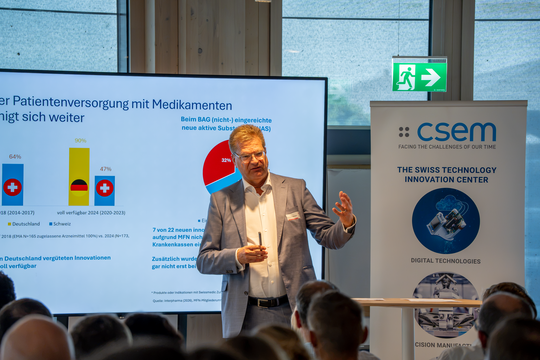
In his opening keynote address, Dr. René Buholzer (CEO of Interpharma) painted a clear picture of the geopolitical reality: While China is rapidly accelerating the pace of pharmaceutical innovation, Switzerland is facing pressure from multiple directions. The U.S., in particular, is increasingly linking drug prices, trade interests, and location decisions. For Switzerland, where research-based pharmaceutical companies invest approximately nine billion Swiss francs annually in research and development, the stakes are high. Buholzer summed up the situation: “Health policy is location policy, and location policy today is geopolitics.” For Switzerland to maintain its international competitiveness and secure its excellence as a leading life sciences hub, it needs practical and predictable rules for international price comparisons, appropriate consideration of the benefits of innovation, and rapid access to new therapies for patients.
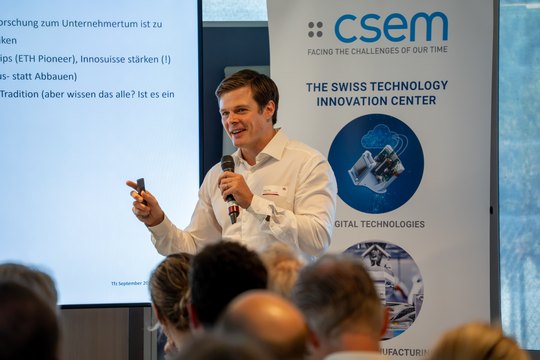
Dr. Simon Ittig (CEO of T3 Pharma) demonstrated how the transition from science to practice can be successful. He compared the journey from basic research in Basel to a billion-dollar exit with Boehringer Ingelheim to a challenging mountain hike. His message: The leap into entrepreneurship in Switzerland still carries too many risks. He argued that there is a need for stronger early-stage funding—such as Innosuisse projects—and more Swiss venture capital so that startups can not only be launched but also scale up within the country.
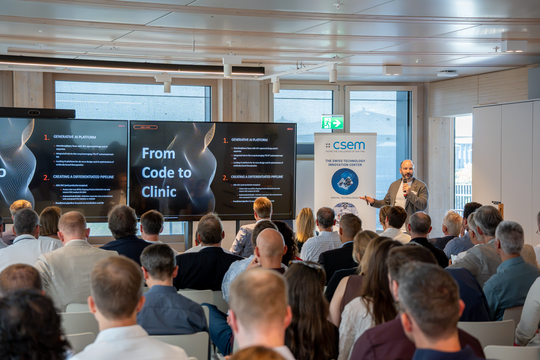
Amer-Denis Akkad (Absci) demonstrated that Switzerland, despite everything, continues to exert enormous appeal. The U.S. pioneer in AI-driven antibody development deliberately chose Zug as the base for its global expansion: key factors included access to top global talent, proximity to key pharmaceutical partners, and an extremely stable, business-friendly environment.
Technology as the Key: Living Longer and Healthier Lives
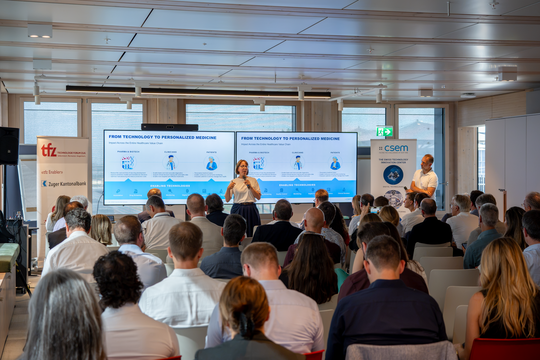
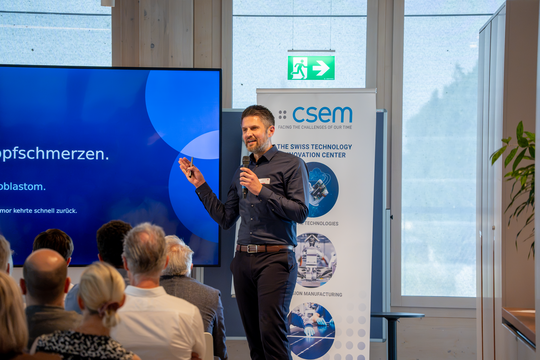
The subsequent presentations highlighted how technology is transforming the entire healthcare system—from research to patient care. Samantha Paoletti (CSEM) and Jonas Goldowsky (Visienco) addressed a key societal issue: Although people in Switzerland live to be nearly 81 years old, on average they spend more than 15 of those years living with chronic diseases. Smart automation and mini-organs (organoids) are the key to developing drugs faster, more affordably, and without animal testing, thereby increasing the number of healthy years of life.
This tech spotlight was complemented by presentations from established industry leaders: Dr. Adrian Kinzel (Novocure) demonstrated how electric fields (TTFields) specifically target cancer cells, while Marco De Lorenzo (SAP) showed how data-driven processes make the global life sciences value chain crisis-resistant.
Startup Insights: When Innovation Changes Patients’ Lives
Two impressive startups demonstrated just how radically and solution-oriented the next generation of medtech and biotech companies thinks:
TransHeps: CEO Martin Birk showed how their new approach clearly identifies the causes of liver damage in clinical trials. Since toxicity is one of the most costly reasons for drug failure, TransHeps prevents promising active ingredients from being wrongly discontinued.
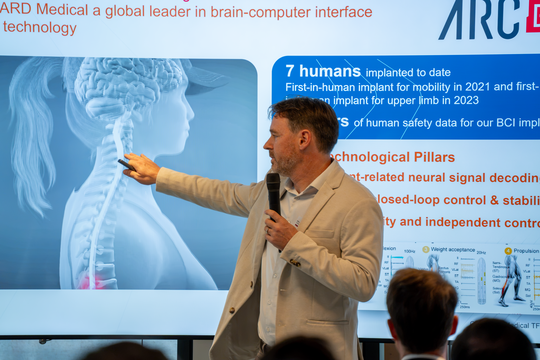
ONWARD Medical: Julien Camisani presented groundbreaking neurotechnology that restores mobility and autonomy to people paralyzed by spinal cord injuries through targeted spinal cord stimulation and brain-computer interfaces (BCI).
Controversial in the Details, United in the Goal: The Location Debate
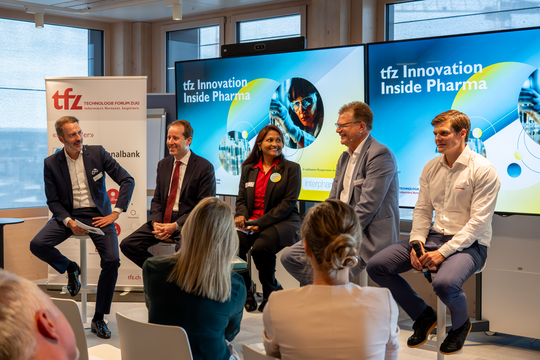
The highlight of the conference organized by the Technologie Forum Zug was the panel discussion, where different perspectives came together: National Council member Thomas Aeschi, PD Dr. Prabitha Urwyler (InnoSuisse), Dr. René P. Buholzer (Interpharma), and Dr. Simon Ittig (T3 Pharma) engaged in an intense debate on the connection between innovation, politics, and healthcare.
Despite differing views on the specifics, a strong consensus ultimately emerged: Switzerland thrives on its innovative strength. To ensure that this cutting-edge medicine and deep-tech pipeline do not migrate abroad, government agencies, the business community, and the scientific community must work together. Only by creating the right conditions—where startups can scale up locally and innovations in the healthcare system reach patients quickly—will Switzerland remain what it is today: the global cradle of life sciences excellence.
A heartfelt thank you to our collaboration partner Interpharma, the municipality of Risch, our technology partner CSEM, our host Amgen, our event sponsor Altorfer Engineering GmbH, all the speakers, and all the guests—for an afternoon full of exciting discussions within the tfz community.